Shaping the Future of Sustainable Project Management in Europe
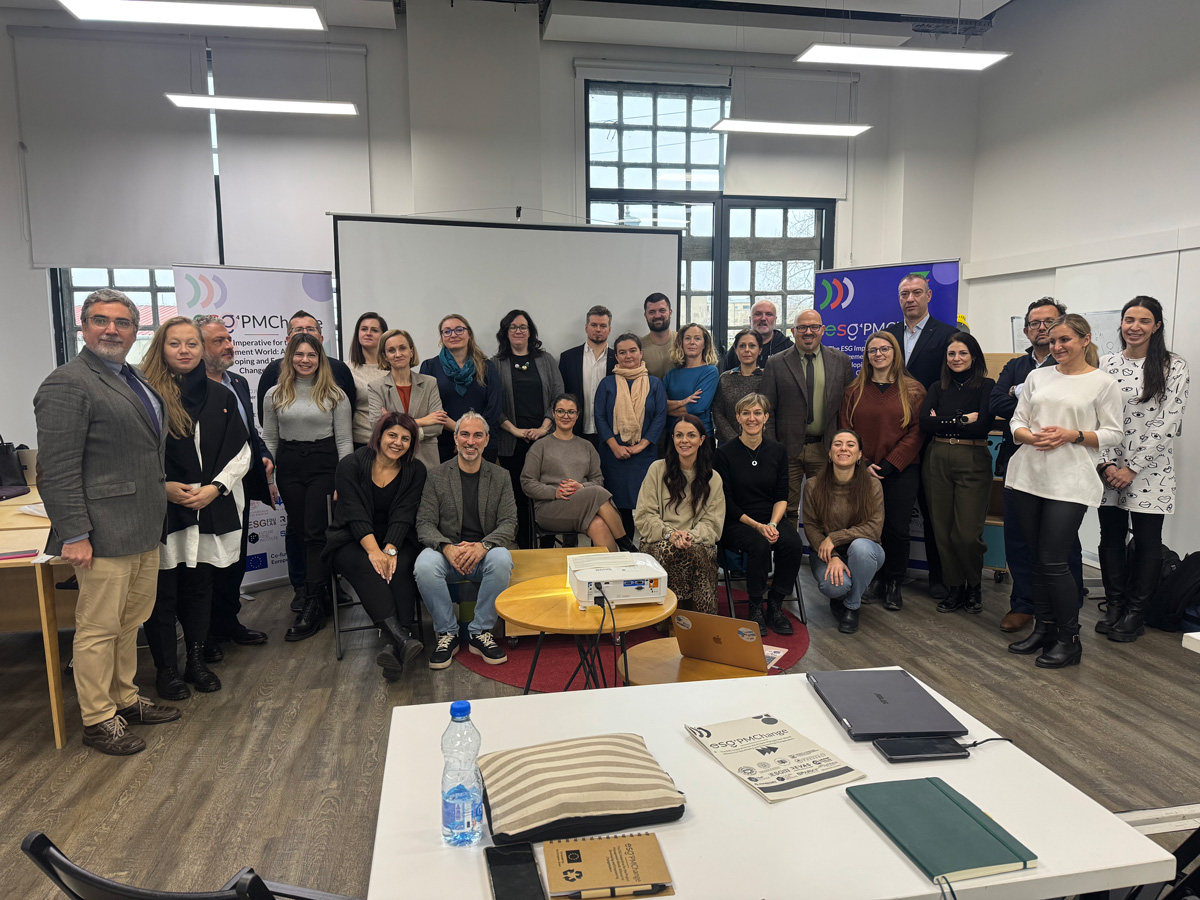
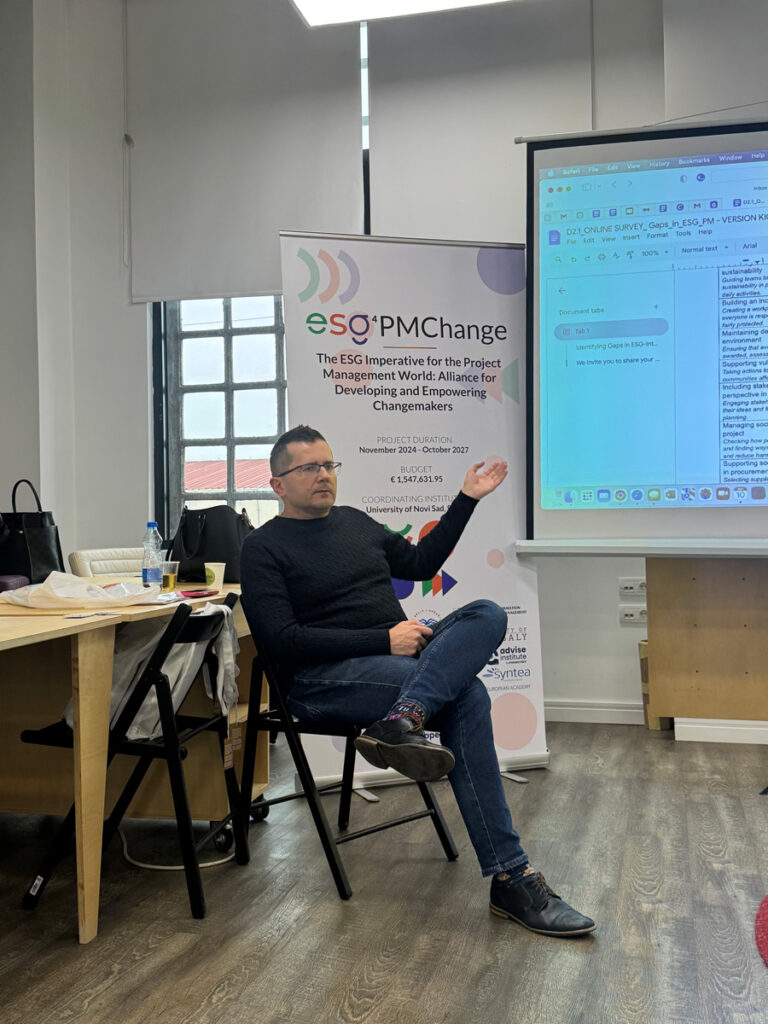
The ESG4PMChange Project officially began in November 2024 under the Erasmus+ Alliances for Innovation Programme, bringing together 14 partner organizations from across Europe with a shared vision: to transform project management through Environmental, Social, and Governance (ESG) principles.
The initiative was created in response to the increasing demand for project managers capable of leading sustainable, ethical, and socially responsible projects aligned with the European Green Deal, the Sustainable Development Goals (SDGs), and evolving ESG regulations.
From the very beginning, ESG4PMChange set out to bridge the gap between labour market needs and educational systems by developing:
- innovative ESG competency frameworks,
- practical learning methodologies,
- digital educational resources,
- and new professional pathways for future ESG-oriented project managers.
The project consortium combines expertise from:
- Higher Education Institutions (HEIs),
- Vocational Education and Training providers (VETs),
- professional associations,
- enterprises,
- innovation organizations from seven European countries.

State-of-the-Art Report on ESG Project Management in Europe
The State-of-the-Art report on ESG project management in Europe (Deliverable 2.1) provides a comprehensive analysis of ESG integration in project management across Europe.
The report investigates:
- ESG and Sustainable Project Management (SPM) concepts
- European sustainability policies and frameworks
- Labour market needs and emerging ESG roles
- Educational gaps and training demands
- Stakeholder perspectives from academia and industry
Key Research Activities
The study was based on four complementary research components:
- Desk research on ESG, sustainability, and project management frameworks
- Analysis of 191 job advertisements across 26 countries
- Online survey with project management professionals
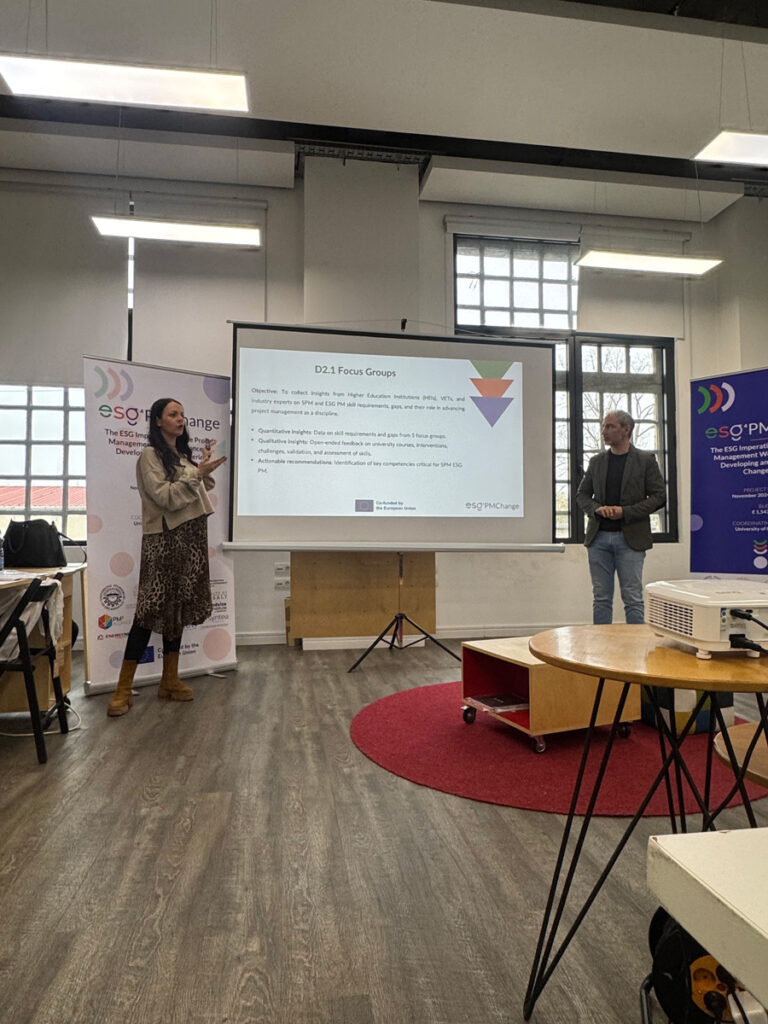
- Focus groups with HEIs, VET providers, and industry stakeholders
Why ESG matters for project management? - Main findings
The Growing Demand for ESG-PM Competencies
- ESG project management is becoming a critical skill across industries such as energy, consulting, construction, and finance.
- Employers increasingly seek professionals who can combine sustainability expertise with strong project management capabilities.
- As ESG expectations grow, organizations are recognizing ESG-PM as essential for long-term resilience and competitiveness.
Competency Gaps and Educational Needs
- Significant skill gaps remain in governance, climate risk management, and inclusive decision-making.
- Universities and training providers are still adapting curricula to meet evolving ESG-PM workforce demands.
- Hands-on learning, real-world case studies, and industry collaboration are emerging as key drivers of effective ESG education.
Challenges in ESG Implementation
- Many organizations struggle with resistance to change, limited awareness, and unclear ESG policies.
- High training and certification costs continue to limit ESG adoption, especially for SMEs.
- Inconsistent ESG job descriptions and undefined roles create confusion in recruitment and workforce development.
Industry-Specific ESG Competency Requirements
- Different sectors require tailored ESG competencies aligned with their operational and regulatory realities.
- Construction and energy industries prioritize sustainability compliance, carbon reduction, and green innovation.
- Financial services and public sector organizations focus heavily on ESG reporting, governance, and social impact.
The Role of Policy and Regulation
- Regulatory frameworks are accelerating ESG integration and reshaping organizational priorities worldwide.
- New reporting obligations are increasing demand for professionals with compliance and sustainability reporting expertise.
- Financial incentives exist to support ESG investment, but awareness and accessibility remain limited.
Recommendations for ESG-PM Development
- Standardized ESG-PM certifications can help align professional skills with industry expectations.
- Flexible learning pathways, including micro-credentials and online programs, are essential for rapid upskilling.
- Experiential learning models should become central to ESG-PM education and professional development.
Strengthening ESG Governance in Organizations
- Successful ESG integration requires strong leadership, structured change management, and employee engagement.
- Organizations can strengthen ESG culture through mentorship programs and sustainability ambassadors.
- Digital technologies and AI-driven tools are improving ESG reporting, transparency, and decision-making capabilities.
The Importance of Cross-Sector Collaboration
- Collaboration between academia, businesses, and policymakers is essential for building ESG-PM standards.
- Shared knowledge platforms can accelerate innovation and spread ESG best practices across industries.
- Increased investment in ESG education will help reduce barriers and expand access to sustainability training.
Challenges and Limitations
- The lack of a universal ESG-PM framework makes skills assessment and recognition difficult.
- Regulatory complexity creates challenges for organizations navigating ESG compliance requirements.
- Many training programs still fail to fully reflect real-world ESG implementation needs.
Contribution and Future Directions
- This research highlights ESG-PM as an emerging professional field with growing strategic importance.
- Organizations embedding ESG into project management can strengthen resilience, trust and long-term value creation.
- ESG-PM will play a key role in shaping a more sustainable, ethical, and socially responsible future.