
“ESG is not for SMEs. It is only for large companies.” That is what many small and medium enterprises believe. Before they get to understand the ESG concepts better, both for their general management and project management, they may feel it is just a fad buzzword or fancy reporting required from large companies. It is time to show entrepreneurs how to include various practices in their project management practices to have a real impact on both the environment and society. So, how do you get started? Here are 5 practical ways to implement ESG in your small business projects.
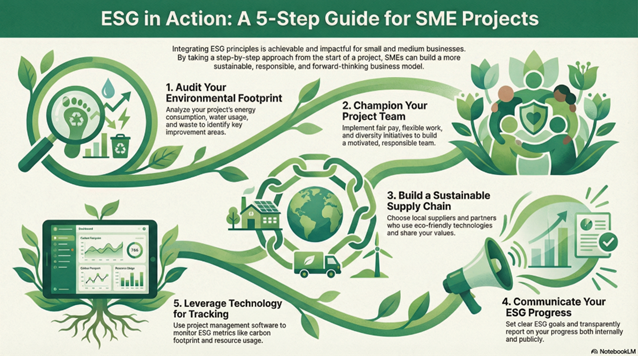
1. Identify your project’s environmental impact
Why it matters:
The first step to implementing ESG principles is understanding how your project impacts the natural environment. Sustainable development starts with identifying the key areas that need improvement – from energy consumption to waste management.
How to do it:
- Conduct an audit of energy and water usage in your company. Can you reduce consumption?
- Identify waste that can be minimized or recycled.
- Consider implementing energy-efficient or water-saving solutions. Maybe you can install solar panels, smart energy management systems or water-saving devices?
Example:
If you run a manufacturing project, start by analyzing the usage of raw materials and energy. Perhaps you can switch to more sustainable energy sources or invest in more eco-friendly materials or find a way to re-use the production waste.
2. Build responsible relationships with the project staff
Why it matters:
HR practices can have a huge impact on people and communities. Your decision around recruiting your team members and personnel management can increase inequalities and promote diversity. It is not a slogan only. You can get highly motivated staff AND do some good!
How to do it:
- Offer flexible working hours to attract talents that may have special personal needs.
- Implement pay equality and transparent promotion policies.
- Focus on employee well-being by offering flexible working hours or health programs.
- Provide diversity and inclusion training.
Example:
An investment project could introduce a policy of openness to diversity in hiring and ensure equal access to promotions regardless of gender, age, or origin.
3. Transition to a sustainable supply chain
Why it matters:
Every project needs resources – raw materials, catering services, stationery. You can have an impact on the environment and society by choosing suppliers who share the same values of responsibility and sustainability.
How to do it:
- Purchase from local, community suppliers rather than global corporations.
- Choose suppliers that use eco-friendly technologies and offer environmentally friendly products.
- Verify the sustainability policies of your business partners.
Example:
If you organize a project event, choose local suppliers to reduce the carbon footprint related to transportation and support the local economy.
4. Implement transparency in ESG reporting
Why it matters:
Transparency is the foundation of credibility in ESG. Even small businesses can start tracking their actions and communicating results related to ESG, both internally and publicly.
How to do it:
- Set ESG goals, such as reducing CO2 emissions by 10% in a year.
- Implement regular reporting on ESG progress within the company.
- Share the results of your actions on your company website or social media.
Example:
A small service business could announce its ESG goals on its website and regularly publish reports on its progress in environmental matters, such as reducing plastic or water usage.
5. Leverage technology to drive ESG efforts
Why it matters:
In the world of project management, technology offers powerful tools that can help small businesses integrate ESG principles more effectively. By using the right digital solutions, you can better track, manage, and optimize the environmental and social impact of your projects, ensuring that sustainability is a core aspect of your project lifecycle.
How to do it:
- Use project management software to track key ESG metrics, such as carbon footprint, waste reduction, and resource usage, across various project stages.
- Implement collaborative platforms to engage stakeholders in sustainable decision-making, ensuring everyone is aligned on ESG goals.
- Utilize project management tools that provide transparency on ESG goals, helping you track progress, adjust strategies, and report on your project’s sustainability outcomes.
Example:
A small marketing agency working on a campaign might use project management software like Asana or Trello to set sustainability goals, such as reducing paper waste or opting for digital over physical marketing materials. By tracking these goals through the software, the team can ensure they stay on target, while also evaluating the campaign’s environmental impact throughout its lifecycle.
Conclusion
Integrating ESG principles into project management may seem challenging, especially for small businesses, but it doesn’t have to be. By taking a thoughtful, step-by-step approach, even the smallest projects can make a significant impact on the environment and society. From leveraging technology to tracking sustainability metrics, to ensuring your project team is aligned on ESG goals, there are many ways to start. The key is to embed these principles from the very beginning of your project lifecycle, ensuring that every decision contributes to a more sustainable future.
By applying ESG in project management, you’re not only improving the quality of your projects but also building a business model that is adaptable, forward-thinking, and aligned with the growing demand for responsible practices.
How have you integrated ESG into your project management practices? Share your experiences in the comments or reach out to discuss how we can help you implement these strategies in your next project.

Elżbieta Szczepaniak
Business and project management expert, co-founder of Revas - Business Simulation Games offering business management simulation games with sustainability modules.