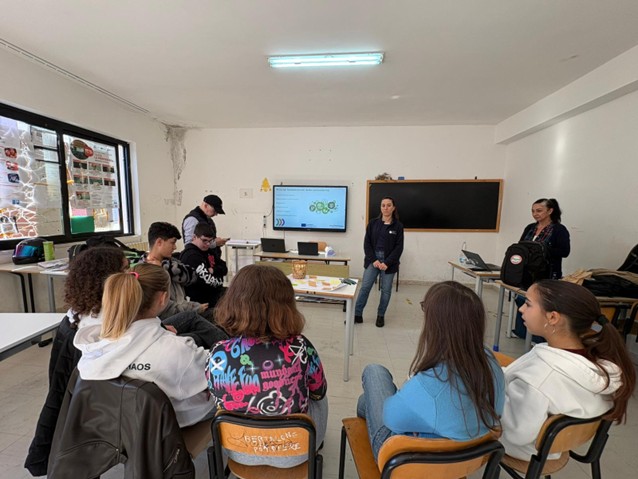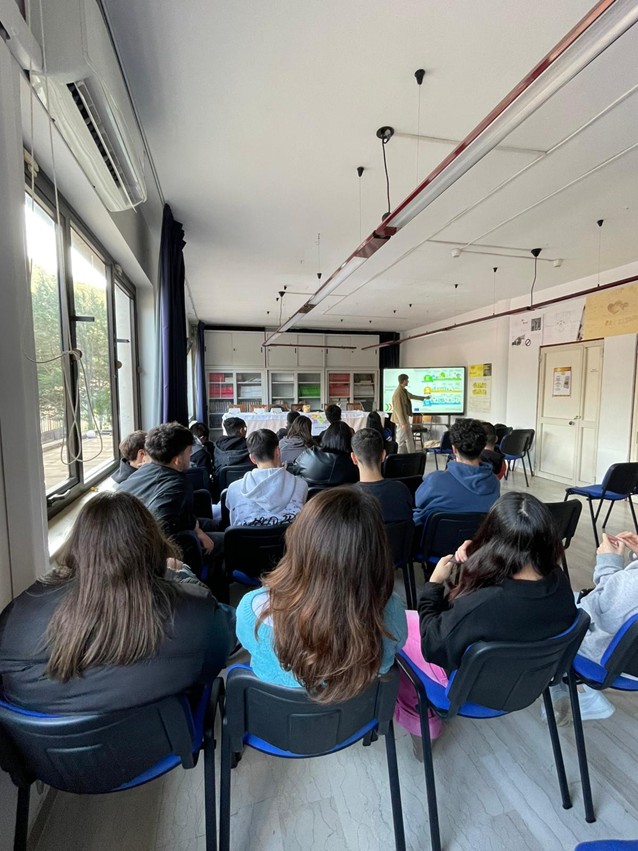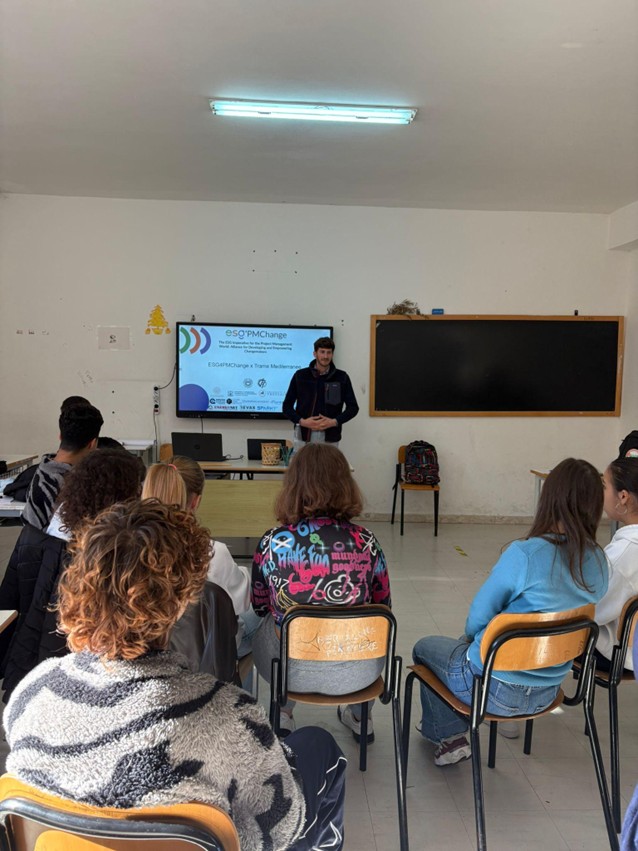
On Friday, November 14th and 17th, the Future Food Institute visited the Istituto Omnicomprensivo Ancel Keys in Castelnuovo Cilento (SA) to engage with students about the ESG4PMChange project.
Bridging the Gap Between Sustainability and Measurement
Sustainability is a concept that most students are familiar with—it’s a core part of our modern discussions about climate change, social responsibility, and the future of our planet. However, what many students don’t realize is that sustainability is a vision, while ESG is the operational tool used to measure and apply that vision. Understanding ESG is key to turning sustainability ideals into actionable strategies that can be tracked and improved over time.
ESG criteria are designed to evaluate how a company operates across three fundamental dimensions: Environment, Social, and Governance. These criteria allow organizations to assess their sustainability performance and ethical impact through concrete metrics, ensuring that companies are not only profitable but also contribute positively to society and the planet.
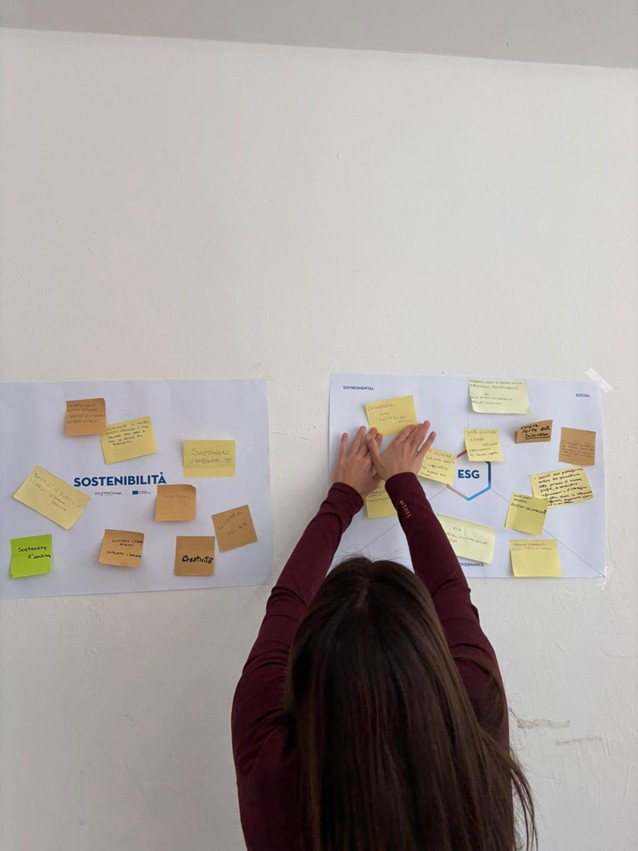
In our session with the students, we took the opportunity to break down these concepts and show how they can be practically applied. We began by asking the students: What does sustainability mean to you? This sparked a lively discussion, where many shared their thoughts on the importance of sustainability in their lives, but few knew how to measure it or apply it in a business context.
ESG: The Operational Tool for Sustainability
While sustainability remains a broad and often abstract concept, ESG provides the framework to make it measurable. By focusing on environmental impact, social responsibility, and corporate governance, companies can ensure they are contributing to global efforts like the UN’s Sustainable Development Goals. For example, when we talk about environmental sustainability, ESG measures like carbon emissions, resource use, and energy efficiency become crucial for evaluating a company’s actual impact.
On the social side, ESG takes into account fair labor practices, community engagement, and diversity, aiming to foster a more inclusive and equitable workplace. Lastly, governance addresses the need for ethical decision-making, transparency, and accountability, which are essential for maintaining long-term stakeholder trust.
Why It’s Important to Teach ESG to Students
The shift toward sustainability is not just a trend—it’s a necessity. More than ever, the next generation of leaders will need to understand how to create sustainable, ethical, and innovative business models. That’s why it’s essential to explain ESG principles clearly. ESG isn’t just for companies already established in the market—it’s a tool that can be applied at the very start of a career in project management, guiding professionals to make responsible decisions.
By giving students the tools to understand and apply ESG, we help them become change agents who can drive sustainability in every project they manage. We can’t just expect students to embrace sustainability—we must provide them with the tools and frameworks, like ESG, to make it measurable and actionable.
In our conversation with the students, we emphasized that sustainability is the vision for a better world, but ESG is the operational framework that ensures companies are following through on that vision. It’s not enough to want a sustainable future; we need to create the standards and criteria that guide us toward achieving it.
As we continue to integrate ESG principles into project management education, we encourage students to think of ESG as a toolkit—one that will help them navigate the challenges of managing sustainable projects. The skills they develop today will be the ones they use tomorrow to drive meaningful, positive change.
The ESG4PMChange project aims to empower students and professionals alike to lead projects that contribute to a better world, focusing not just on profit but also on people and the planet. Through initiatives like this, we’re helping build a generation of project managers who are equipped to measure, manage, and implement sustainability in every decision they make.
We hope the students concluded the session with a deeper understanding of the importance of ESG and how it can be used to measure and drive sustainability in their future careers. Sustainability may be the vision, but ESG is the tool that makes it possible.
In addition, we are committed to consistently integrating references to ESG measures into the various lessons we deliver in schools, in order to strengthen understanding and help students.