
A three-cycle educational programme in Novi Sad brought together students and professionals to explore how project management can drive sustainable and regenerative impact. Through an engaging mix of theory, practice, and real-world examples, participants strengthened their understanding of ESG-oriented project approaches while connecting with key European initiatives.
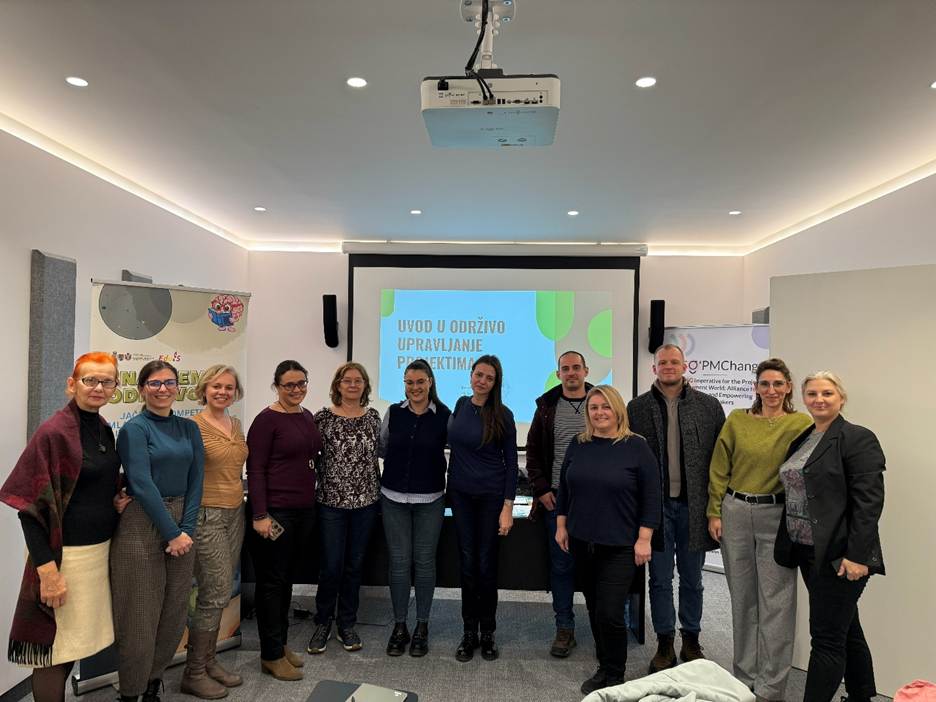
Building Competences for Sustainable Project Leadership
Designed as a capacity-building training programme, the initiative introduced participants to the foundations of sustainable project management and its growing importance across economic, social, and environmental contexts.
The programme focused on:
- transitioning from traditional project management to impact-driven and value-oriented approaches
- understanding and applying the P5 model (People, Planet, Prosperity, Process, Product)
- exploring the PRiSM methodology as a structured framework for integrating sustainability into project lifecycles
- developing practical skills through teamwork and real-case analysis
Participants were encouraged to view sustainability not as a compliance requirement, but as a core project management competence.
Connecting Projects, Knowledge, and Practice
A dedicated cross-project clustering session brought together several EU-funded initiatives—ESG4PMChange, SPM2, GreenTech Horizons, and ESDG—as practical examples of how sustainability principles can be embedded into project work.
Rather than focusing on promotion, the session highlighted how individuals involved in such projects can:
- contribute to long-term value creation
- influence sustainable outcomes through everyday decisions
- support regenerative approaches aligned with global project management frameworks
This approach positioned EU projects as powerful platforms for learning, collaboration, and real-world impact.
Hands-On Learning and Reflection
A strong practical component enabled participants to apply newly acquired knowledge through the P5 Sustainable Project Canvas. Working in teams, they analysed project scenarios, identified sustainability impacts, and explored trade-offs across the project lifecycle.
The programme concluded with reflection sessions, allowing participants to connect insights with their own academic and professional contexts.
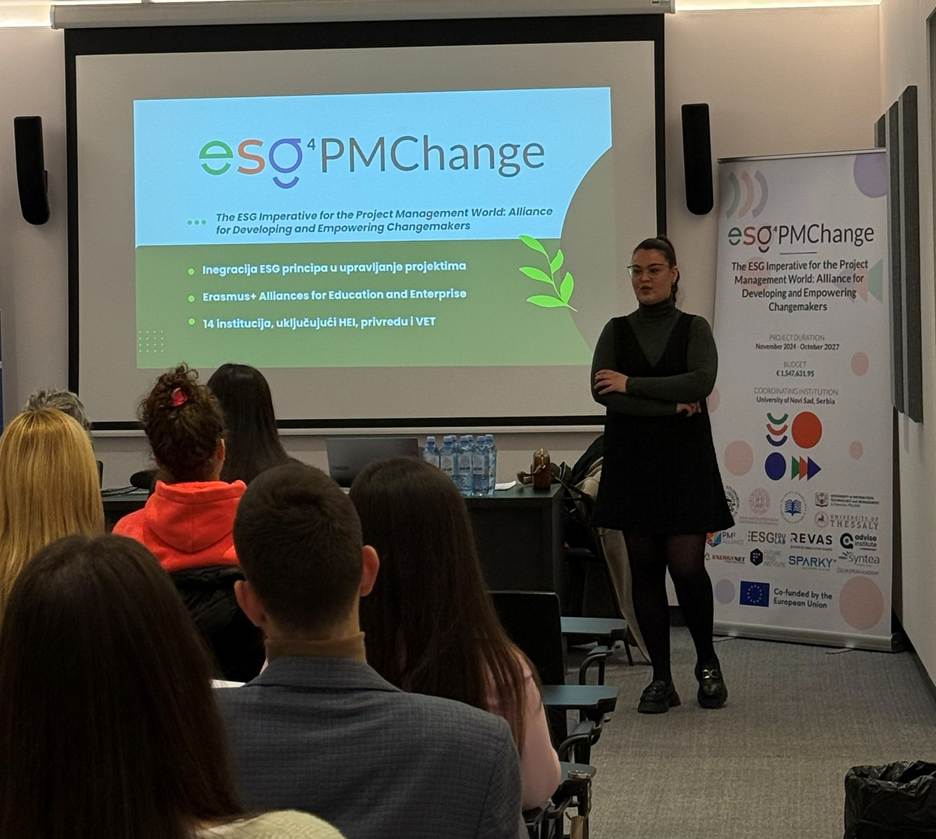
Diverse Participation Across Sectors
Across three training cycles, the programme engaged 58 participants, including:
- students and early-career professionals
- experienced practitioners and entrepreneurs
- representatives from academia, industry, and public sector
This diversity fostered rich discussions, peer learning, and cross-sector exchange, reinforcing the relevance of sustainable project management across different fields.
Strong Engagement and Lasting Connections
Participants responded very positively to the training, particularly valuing:
- the interactive and collaborative format
- opportunities for networking and knowledge exchange
- practical tools applicable to real-world challenges
Many participants connected with organisers and peers on LinkedIn and expressed interest in future training opportunities.
Extending Impact Through Digital Outreach
The programme’s visibility was actively supported through social media engagement, including:
- regular Instagram posts and stories promoting sustainability topics and participation
- video highlights capturing key moments from each training cycle
- participant-generated content shared across LinkedIn networks
These activities helped extend the programme’s reach beyond the training itself, strengthening its impact within both academic and professional communities.
By combining structured learning, practical application, and cross-project collaboration, the programme successfully demonstrated how project management can evolve into a key driver of sustainable and regenerative change.