
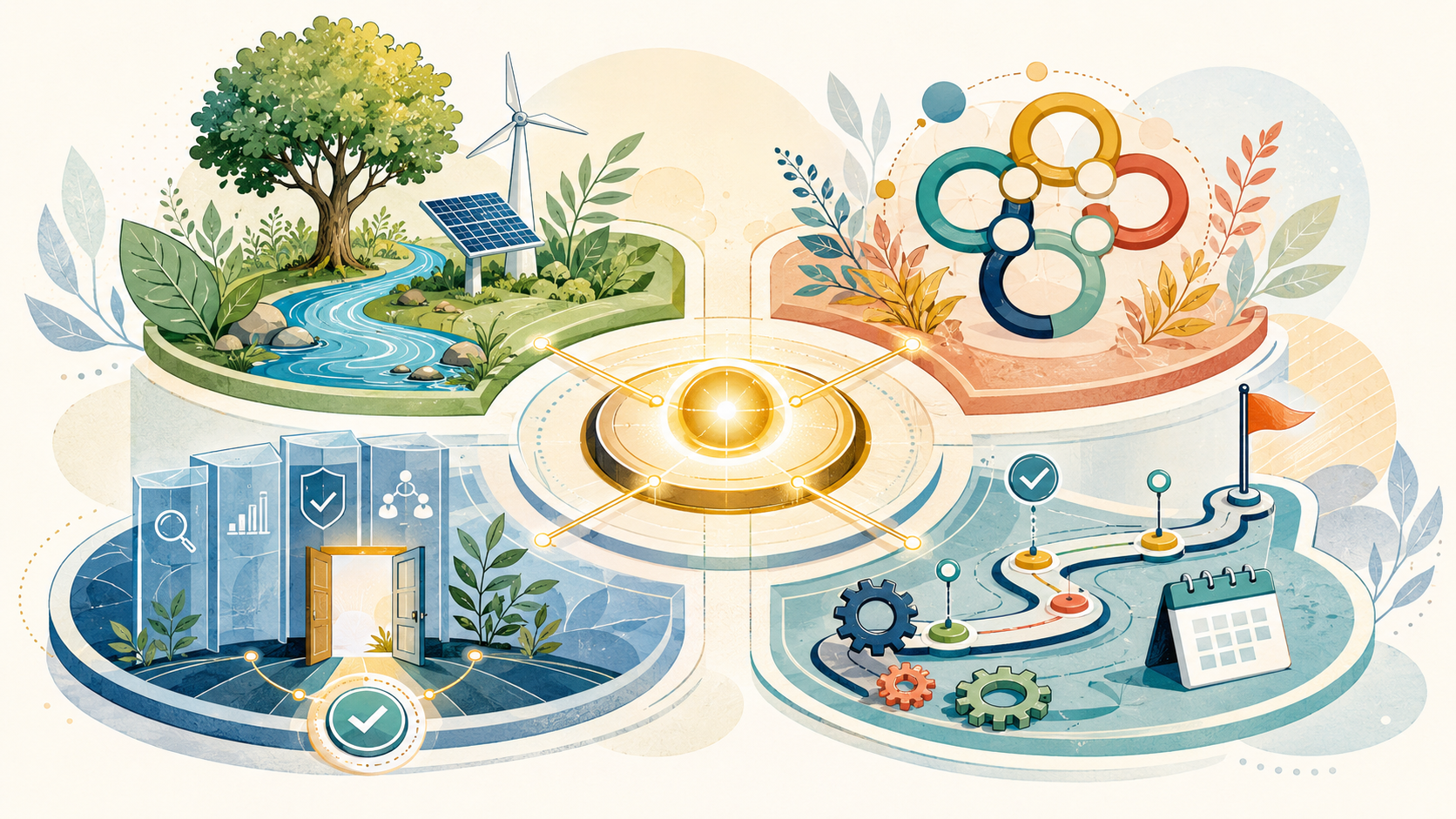
In project management, we often place the focus on methods, processes, governance structures, plans, controls, and performance indicators. We discuss risks, schedules, budgets, stakeholders, and benefits. Increasingly, in the context of Environmental, Social, and Governance (ESG) projects, we also speak about sustainability objectives, reporting requirements, regulatory compliance, and impact measurement.
These elements of course matter and are central to Project Management practice. They provide structure, consistency, and systematic accountability. They help organizations deliver projects in increasingly complex environments. Yet, despite the sophistication of modern project management methodologies and frameworks, there remains a dimension that cannot be fully captured by processes, templates, or indicators.
That dimension is ethics.
The word itself can sometimes create discomfort. It may sound abstract or philosophical, detached from the practical realities of project delivery. Yet within the project management profession, ethics is neither abstract nor optional. It is embedded, explicitly or implicitly, in the standards, methodologies, and competency frameworks that guide professional practice around the world.
The Project Management Institute (PMI) places ethics at the centre of professional conduct through its Code of Ethics and Professional Conduct, emphasizing responsibility, respect, fairness, and honesty. The International Project Management Association (IPMA) integrates integrity, accountability, and ethical behaviour into its competency baseline. PRINCE2 reinforces transparency, accountability, and responsible governance through clearly defined decision-making structures. PM² similarly recognizes professional conduct, integrity, responsibility, and respect as essential attributes of effective project management.
This shared recognition raises an important question. Why do project management methodologies, developed in different contexts and for different purposes, consistently highlight professional conduct, integrity, responsibility, respect, and ethical judgement?
While these approaches may differ in emphasis, they agree on project management not being merely a technical discipline. It is also a professional practice that is undertaken within a tissue of personal relationships that carries responsibilities toward people, organizations, communities, and society. Projects are vehicles for change. They introduce new systems, build infrastructure, transform organizations, influence communities, and shape the future of people. In doing so, they frequently create situations where competing interests, priorities, and expectations must be balanced. The people component is always present. Therefore, the personal behaviour component in the way such project management practice is undertaken is very often key to success and it needs to be guided by ethical principles.
A project may create economic opportunities while generating environmental concerns. A decision that improves efficiency may affect inclusion or accessibility. An accelerated implementation schedule may satisfy urgent demands but reduce opportunities for stakeholder participation. A technically sound solution may produce unintended social consequences. In many of these situations, methodologies can guide the process, but they cannot make the decision.
Frameworks can help identify stakeholders. Governance structures can define responsibilities. Risk management processes can assess consequences. ESG reporting frameworks can measure impacts. Yet none of these tools can fully determine what should be done when legitimate interests point in different directions. At that point, judgement becomes essential and this is particularly relevant in the ESG context.
ESG is often associated with reporting obligations, compliance requirements, indicators, and performance metrics. These are important mechanisms for transparency and accountability. However, reducing ESG to compliance risks overlooking its deeper purpose.
At its core, ESG encourages decision-makers to consider multiple dimensions simultaneously. Environmental, social, economic, and governance considerations rarely align perfectly. Trade-offs emerge. Priorities compete. Long-term consequences must be weighed against short-term needs and the people dimension needs to be kept always there because managing these tensions requires more than technical expertise. It requires the capacity to exercise sound judgement in situations where there may be no perfect solution. This is where ethics enters the conversation—not as a separate discipline, but as a integrated element for professional action.
Ethics does not eliminate complexity. It does not provide automatic answers to difficult questions. Rather, it helps ensure that decisions are approached with integrity, responsibility, fairness, transparency, and respect for those affected by them. In this sense, ethics is closely connected to trust.
Projects depend on trust between teams, sponsors, partners, regulators, communities, and stakeholders. Trust is built not only through successful delivery, but through the way decisions are made, communicated, and justified. Stakeholders may not always agree with a decision, but they are more likely to accept it when they perceive that it has been taken responsibly, transparently, and in good faith. This is why ethics cannot be treated as an afterthought or a compliance exercise. It is a fundamental component of professional credibility.
As ESG considerations become increasingly integrated into project management practice, the importance of this dimension will only grow. Project professionals are expected not only to deliver outputs and outcomes, but also to navigate complexity, balance competing interests, and contribute to sustainable and responsible change. Methodologies will continue to evolve. Standards will be updated. Reporting frameworks will become more sophisticated. New tools will emerge to support decision-making. Yet no methodology can fully replace the responsibility of professional judgement, and professional judgement needs to be solidly anchored on ethical considerations.
Ultimately, projects are delivered through decisions. And while processes can guide those decisions, ethics helps ensure that they are made with a sense of professional and moral duty toward the people, organizations, and environments they affect. Perhaps this is why the world’s leading project management methodologies, despite their differences, converge on the same principle. Success is not only about what we deliver. It is also about how we choose to deliver it.
Agustín Moya Colorado
Agustín Moya-Colorado is an agricultural engineer by training with post-graduate studies in Project Cycle Management in Development Cooperation and a certification in Project Management by the PM²Alliance. In his over 25 years of professional experience, he has worked with civil society organizations, donors (mainly the EC), and companies; in numerous projects in different contexts and countries. He has a passion for project management and capacity building. This passion has taken him to work in Central America (Nicaragua, Guatemala, El Salvador); in Africa (Namibia, Mozambique) and in Europe (northern part of Cyprus). He has participated in and led teams working in different fields such as rural development, civil society strengthening, WASH (Water, Sanitation and Hygiene), and peace and reconciliation. This blend of experience allows him to understand the perspectives, needs and constraints of the different stakeholders in designing, planning and implementing projects.