

There was a time when the problem was invisible.
In the 1970s and 1980s, scientists began to notice something unusual high above the Earth. The ozone layer—an invisible shield against harmful ultraviolet radiation—was thinning. The evidence built gradually through measurements, research and peer-reviewed studies. There were no viral images, no real-time dashboards, no instant global debates. Yet the implications were profound. The main culprits—chlorofluorocarbons (CFCs)—were everywhere: refrigeration, aerosols and industrial processes. They were embedded in everyday economic life and largely unquestioned.
What followed was, in retrospect, a striking sequence: evidence led to concern; concern to political attention; attention to negotiation. In 1987, the Montreal Protocol was adopted. It was a different media environment—no internet amplifying every perspective, no social media accelerating disagreement, no constant stream of competing narratives. Information travelled more slowly. Debate was less fragmented. Trust in scientific institutions, while imperfect, was strong enough to support collective action.
This does not mean the transition was easy. Industries dependent on CFCs faced disruption: alternatives were not immediate, costs were real, and timelines and technologies were uncertain. But a shared judgement emerged that the risk of inaction outweighed the discomfort of change. Governments agreed to phase out harmful substances. Industries adapted, innovation accelerated, and substitutes were developed and deployed. The system adjusted—imperfectly and not overnight, but decisively.
Today, the ozone layer is recovering—a rare case where global environmental governance acted in time.
When we turn to climate change, the contrast is hard to miss.
Here too, the scientific evidence is clear. Decades of research link human activity to rising global temperatures, with risks already visible in extreme weather, shifting ecosystems and growing strain on natural and social systems. Yet the pathway from evidence to action has been far less direct. Why?
Part of the answer is scale. Climate change is not confined to a narrow set of substances or industries; it is embedded in how economies run, how energy is produced and consumed, and how societies are organised. Part is context. We live with instant communication in which information moves fast but not always coherently. Scientific findings compete with political narratives and economic interests. Consensus is harder to build, and trust more fragile.
Then come the trade-offs. Ozone depletion demanded significant but relatively contained changes. Climate action requires systemic transformation across sectors, livelihoods and ways of living. Costs and benefits fall unevenly, timelines are longer, and uncertainties greater. In that landscape, agreement is easier to delay.
This is where the conversation around ESG takes on a deeper meaning. At one level, ESG is a framework—a way to integrate environmental, social and governance considerations into decision-making, with shared language and, increasingly, metrics. At another level, it is more fundamental: an attempt to establish a moral compass when direction is contested.
When the path forward involves trade-offs—between growth and protection, short-term gains and long-term resilience—technical solutions are not enough. What is required is judgement.
Consider a local example. A region wants to stimulate development through a new infrastructure project. The benefits are immediate: jobs, connectivity, investment. For communities under pressure, these outcomes matter. Yet the project may also bring environmental costs—land-use change, higher emissions, added pressure on natural resources. From a narrow economic lens, the choice can look straightforward; from an environmental one, it raises concerns.
From an ESG perspective, the situation is more complex. It is not about choosing one dimension over another, but about understanding how they interact, where they conflict, and how to navigate the tension responsibly. There is no single “correct” answer—but there is a need for balance.
The ozone story suggests that, under the right conditions, balance can be achieved through collective alignment: shared recognition of risk can produce coordinated action, even with compromise. The climate story suggests that alignment is harder when stakes are broader, impacts more uneven, and debate more fragmented.
In the space between clarity and complexity, ESG is often expected to guide decisions. But guidance is not certainty. A compass does not flatten difficult terrain; it helps orient movement through it. For those designing, managing or evaluating projects, this raises practical questions:
What does it mean to act responsibly when objectives pull in different directions?
How should decisions be made when environmental, social and economic considerations do not align neatly?
How much weight should be given to long-term impacts when short-term needs are pressing?
These are not abstract questions. They arise in real situations—often under time pressure, with incomplete information and competing expectations. In that context, ESG can be reduced to compliance: requirements to satisfy, indicators to report, standards to meet. Those tools matter, but they do not resolve the underlying dilemmas.
Responsibility cannot be fully codified. It requires interpretation, prioritisation, and sometimes uncomfortable choices. The ozone story reminds us not only that action is possible, but that it depends on alignment—between knowledge, values and decisions.
In today’s climate context, that alignment is harder to achieve. This is precisely why ESG matters: not as a guarantee of the right outcome, but as a way to keep different dimensions in view. It helps prevent decisions from being driven by a single perspective, and it encourages reflection where instinct might favour speed. In that sense, it becomes a constant reminder of balance.
Balance does not mean equal weight in every situation. Sometimes environmental considerations must take precedence; other times social needs are more urgent; and economic viability cannot be ignored. ESG does not eliminate these tensions—it ensures they are recognised, and that decisions are made with awareness of their implications.
In a world where consensus is harder to achieve, responsibility increasingly sits with individual decisions, projects and organisations. This is both a challenge and an opportunity: a challenge because it demands moving beyond clear rules and engaging with complexity; an opportunity because it allows more thoughtful, context-sensitive choices.
The hole in the ozone layer is slowly closing; the challenges of climate change are still unfolding. Between these two realities, choices are made every day—quietly and incrementally, but with lasting consequences. In that space, ESG does not provide all the answers. But it does ask the right questions. And sometimes, that is where responsible action begins.
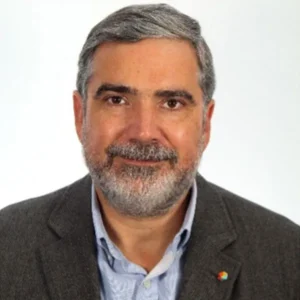
Agustín Moya Colorado
Agustín Moya-Colorado is an agricultural engineer by training with post-graduate studies in Project Cycle Management in Development Cooperation and a certification in Project Management by the PM²Alliance.
In his over 20 years of professional experience, he has worked with civil society organizations, donors (mainly the EC), and companies; in numerous projects in different contexts and countries. He has a passion for project management and capacity building. This passion has taken him to work in Central America (Nicaragua, Guatemala, El Salvador); in Africa (Namibia, Mozambique) and in Europe (northern part of Cyprus). He has participated in and led teams working in different fields such as rural development, civil society strengthening, WASH (Water, Sanitation and Hygiene), and peace and reconciliation.